Wednesday, October 23, 2013

Workshops with the Experts

Daniel Foley

  • There is so much I've learned from my brief encounter with Mr. Foley, particularly when it came to performing Shakespeare. I tried to keep his lessons in mind during the performance of Romeo & Juliet.
  • The importance of vocalization; warm-ups, enunciation, and projection
  • The musicality of Shakespearean language
  • Awareness of the body; especially in physical scene
    • the safety of the partner(s) is of the highest priority, above all else
    • it is all in the effect produced, not the actual means; no need to actually punch someone to make something seem realistic
      • hair pulling; slap; punch
      • basic stick-fighting


Chad Austin

  • A unique personality; I took notes on his character for future reference.
  • Of the lessons he gave, I found particular value in his 'interview' exercise
    • first impression is important
    • it is very difficult to be yourself and confident
    • nerves come when you least expect them, so always be prepared

Tuesday, October 22, 2013

TPPP Outline

WORK IN PROGRESS

Mark Hill
  • [get picture from Mrs. Moon]
  • spacial relations; Anne Bogart and Tadashi Suzuki
  • experience with Butou theatre and the spirituality of it
  • differences between western theatre (vocalization; centered higher up; positive space) and oriental theatre (physical; centered lower down; negative space)
  • the importance of an ensemble; peripheral vision
  • dynamic stillness; counterpoint, etc.

The Pillowman

  • first experience with post-modernism
  • very raw, surreal, and disturbing
  • fascinated me as a scriptwriter


The Odyssey

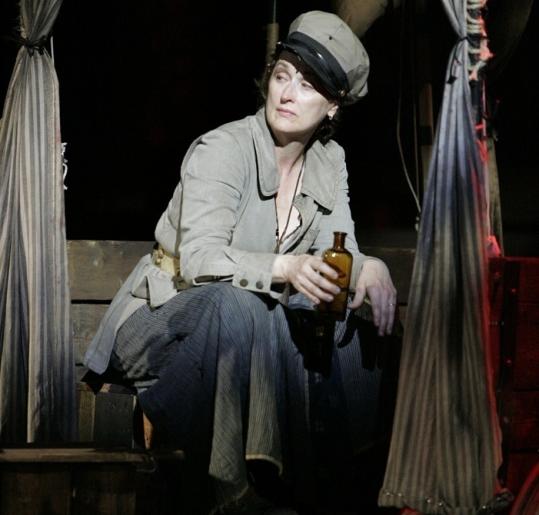
Mother Courage and her Children / Bertolt Brecht


Good Soul of Szechuan

  • First experience with production elements; newfound appreciation
  • Learned about dramaturgy; its importance in a play; a new interest
  • Learned about lighting; learned about different types of lighting and how lighting can so affect atmosphere
  • Difficulty balancing practicality and ideas


Bunraku Theatre


Commedia del Arte

Romeo and Juliet

  • first major production in high school
  • enlightening and thrilling experience
  • called upon lessons with Mark Hill (on Anne Bogart and Tadashi Suzuki) in reference to spacial relations, physicality, and the ensemble
  • called upon workshops with Daniel Foley on Shakespearean language and vocalization
  • a demonstration of how theatre evolves with time; the themes in Shakespeare are universal and timeless, so even set in a different setting, it is relevant and plausible.


Shadowland

  • an inspiration to me
  • an example of theatre that evolves; theatre ant technology
  • physicality of the show
  • Reminiscent of Suzuki in that every moment is aesthetically beautiful


Salar de Uyuni
  • theatre is a world that reflects and changes with the world around it
  • a world that reflects me, and everything I do causes ripples in the world around me
  • it is ephemeral and never stops changing - in the Salar de Uyuni, the sky changes, and it is reflected in the water; everything on the flat is reflected and every movement of the wind or a step causes ripples in the environment.
  • theatre is reflective, changing, and beautiful.


Monday, October 14, 2013

Arthur Miller and The Crucible

http://the_english_dept.tripod.com/miller.html

"Fear doesn't travel well; just as it can warp judgment, its absence can diminish memory's truth. What terrifies one generation is likely to bring only a puzzled smile to the next." 

"The Crucible was an act of desperation."


Arthur Miller
  • Death of a Salesman, The Crucible
  • Was married to Marilyn Monroe
  • Cynical; middle-class citizens being harmed, social justice
  • Witch Hunt, Antisemitism, Red Scare, again and again, history repeats itself ; Miller lived familiar to all this fear.
  • Miller found motivation in the liberals who wanted to oppose the violation of civil rights during the Red Scare Interrogations but were too fearful to attempt.
  • In 1951, Miller wrote a screenplay called "The Hook", about union corruption on the Brooklyn waterfront.
    • Harry Cohn, the director showed the script to the FBI
    • Cohn then told Miller to change the threatening and murdering gangsters in the script into Communists instead.
    • Miller refused, and Cohn sent him this condemning telegram: "The minute we try to make the script pro-American, you pull out."
  • It is hard to let go of our belief that society must somehow make sense. Our unwillingness to believe that society is condemning and harming innocent people drives us to internally deny and ignore the evidence that is there.

Mccarthyism
  • The practice of making accusations of disloyalty, subversion, or treason without proper regard for evidence. It also means "the practice of making unfair allegations or using unfair investigative techniques, especially in order to restrict dissent or political criticism."

"As with most humans, panic sleeps in one unlighted corner of my soul." I'd just like to take a moment to appreciate Miller's skill with language.

Analysis of The Crucible

  • Idea; The Special World (create a planet)
    • Dialogue/Anything in PoMo
      • Roots
      • Given Circumstances
      • Polar Attitudes (pendulum of change)
        • beliefs
        • prejudices
        • perception
        • tolerance
        • assumptions
      • Previous Action
      • Dramatic Action of the Characters
      • Character Development
        • Archetypes
        • Reactions
        • Speech patterns
        • Motivations
        • Etc. etc. etc.
  • The Crucible
    • Religious beliefs
    • Environmental situation
    • Social environment
    • Political environment
    • Economic situation
    • Geographic position
    • Time


Thursday, October 10, 2013

Post-Modernism

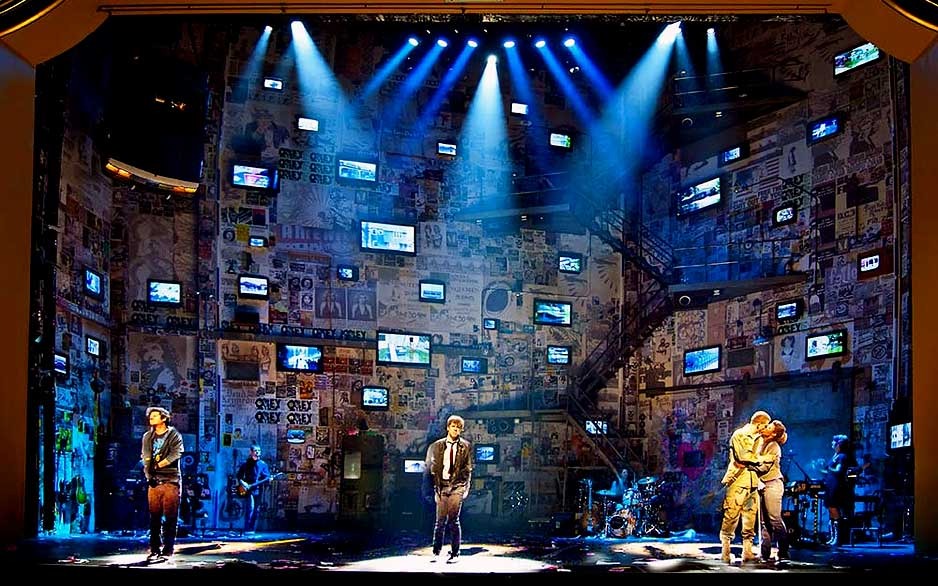
American Idiot: A New Genre
I had listened to music before, but nothing quite like the Green Day rock that characterizes American Idiot.
I had watched performances before, but nothing quite like the organized chaos that marks this Broadway hit.

It was easy to understand how the set design won an Academy Award for this show. The whole tone and mood of the performance was conveyed to the audience from the beginning, and only emphasized and strengthened throughout the play. There was always a surprise.

TV screens lined the whole of the stage, alongside graffiti and newspapers.


Victor ou les Enfantes au pouvoir: Cruel and Absurd
Well, though the performance wasn't actually 'cruel' and 'absurd', it did deal with Theatre of Cruelty and Absurdism, two styles of production that I had yet to see firsthand. I'd call my experience a success, and I was fascinated by the unique gripping and disturbing nature of the play as a whole.

However, this was also the first time I understood how frustrating it must be for Koreans to watch plays in original English (Phantom of the Opera, Wicked, and Avenue Q being cases in point). I feel as if I've lost so much of the nuance, meaning, story, and essence of Victor ou les Enfantes while struggling to read the rapid translations off to the far sides of the stage. As for mise en scene, there is just too much to discuss. What first...

The first image of the stage.

The lighting is red, bathing the stage in an eerie crimson light. Hanging from above is a huge mass of tangled... something. Others seemed to view them as tree roots, but I thought them too thin for that - they seemed more like a hanging mass of hair, wrapping and tangled in on each other and casting shadows upon the walls. Two lights. Two shadows. Opposite sides of the stage.

And in the center is a small three-sided room with thick walls. Within it is a chair and a man... boy... stock still and unmoving, merely taking in the red light and letting it cast shadows upon his face. With arms around his knees, he sits in that cramped room. Claustrophobia - that was the first word that came to mind.

Throughout the play, the size of the room differs - it slowly expands, opening wider and wider as scenes unfold in the play, which I felt symbolized not only progression of the plot but the main character's own mind. However, eventually, the walls expand to the point that it crushes one of the other characters behind it. From then on, things begin to close up again, until the end, where the main character and his family lied dead.

Shadows dance across the walls, almost in a world separate from the action on stage. Children become enormous. Adults become small. Chairs become monuments. And the roots are always there. They formed a winding, tangled pattern on the walls and the floor, enveloping and entrapping the shadows of the actors.

Chairs also played a large role on stage, not only as props, but as a part of the set. There was initially only one chair. However, as the story continued on, more and more chairs made their way onto the stage, so subtly that I didn't notice until there were at least fourteen more arranged about the stage.

One particularly striking moment was when all of the chairs were facing inwards, when the two child characters were reenacting the scene of their parents' affair. It had an eerie effect, and seemed to suggest that this whole thing was a spectacle - people were watching. Not actors, but the chairs all facing them simply gave that feeling.


King Lear: The Suzuki Experience
I truly felt the language barrier this time. I was unable to understand elevated language such as Shakespeare in Japanese and couldn't read it fast enough in Korean. However, even without the beauty of Shakespeare's language, I could appreciate the beauty of the performance just fine.


This was my first time seeing Suzuki truly performed, and I was immediately struck by the movements of the play. Each actor didn't walk - they shuffled, but so gracefully that they seemed to glide. If I hadn't seen the movement of their legs beneath their costumes, I would have thought them ghosts.

The aesthetic beauty of Suzuki's directing was astounding. Every moment on the stage could have been photographed and each would have been as interesting as the next.

The set itself was simple - merely a line of sliding doors. However, depending on which doors were open and what lighting was used, the whole environment could change in its entirety. First it was a corridor, but next it could be a line of pillars, or a chamber, or the outside of a building, or even a large hall.

There were slats of wood hanging from above, which created shadows in such a way that it cast a barred design across the floor - simple, striking, and significant.

Wednesday, September 4, 2013

TPPP Images

Mark Hill

The Pillowman


The Odyssey

Mother Courage and her Children / Bertolt Brecht


Good Soul of Szechuan

Bunraku Theatre


Commedia del Arte

Romeo and Juliet
[image pending]

Shadowland


Salar de Uyuni


Sunday, August 18, 2013

My Manifesto

A Manifesto

Time is a sort of currency.
You can save it, you can spend it,
And if you will it, even waste it.

It is a wealth that you spend
On the tax of your life
Every second of breath for a per-minute price

So in the end, the question is, what is worth your time?
If we could hold time within our hands,
Would we perhaps be more frugal?

The journey that’s taken a lifetime to walk
The relics of old and antiques in the shops
They’re priceless in monetary terms

Because their worth was built in time.

So ask yourself, what is worth your time?
For me? Something of a passion
Something I can create with this intangible wealth

Something that cannot be quantified
In the context of papers and coins
Because nothing would compare to the time I have spent

In just doing it. In creating it.

Something that looking back, I could never call a waste.
And that is something for me, only I can choose.
And for you, only you.

The sands of your life trickle slowly but surely
Into a glass with a shape yet unknown
Which should, in the end, should be a vessel you chose

Let no one else dictate what is worth your while

Because your time is your own.

Sunday, May 19, 2013

Japanese Theatre


MISSED SOME OF THE NOTES TRYING TO FIX TICO'S (MY LAPTOP'S) HINGE
  • Often all male and all female
  • Kabuki
    • passing alone the dialogue
    • dividing lines/speaking in unison and one piece of dialogue passes on
  • Time is malleable in Japanese theatre
  • Time and place is transient
    • theatrical time is adapted to the audience
    • movement can interrupt narrative time
  • Zeameay????
    • poetic concept; honi; essential characteristics
    • beauty of form
  • Bunraku
    • bite the sleeve to hide tears
  • They vary
    • speed
    • timing
    • intensity
    • design
    • color
  • verisimilitude
    • the element or aspects of reality that you evoke in your writing
  • intertextuality
    • theatricalization of the mechanics of theatre
  • "traditional Japanese theatre is presentational theatre vs. representational theatre"